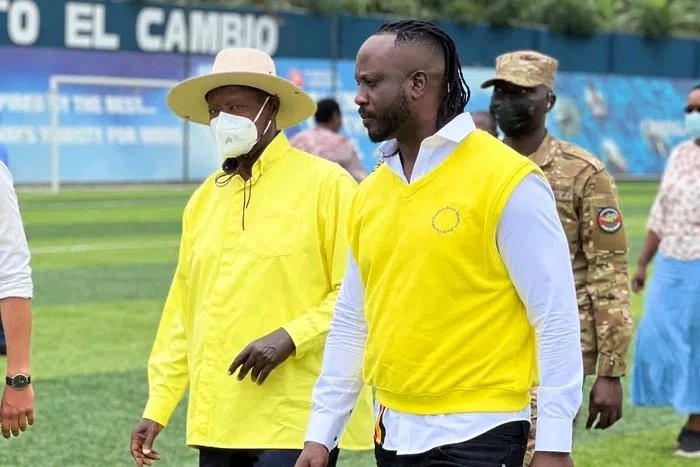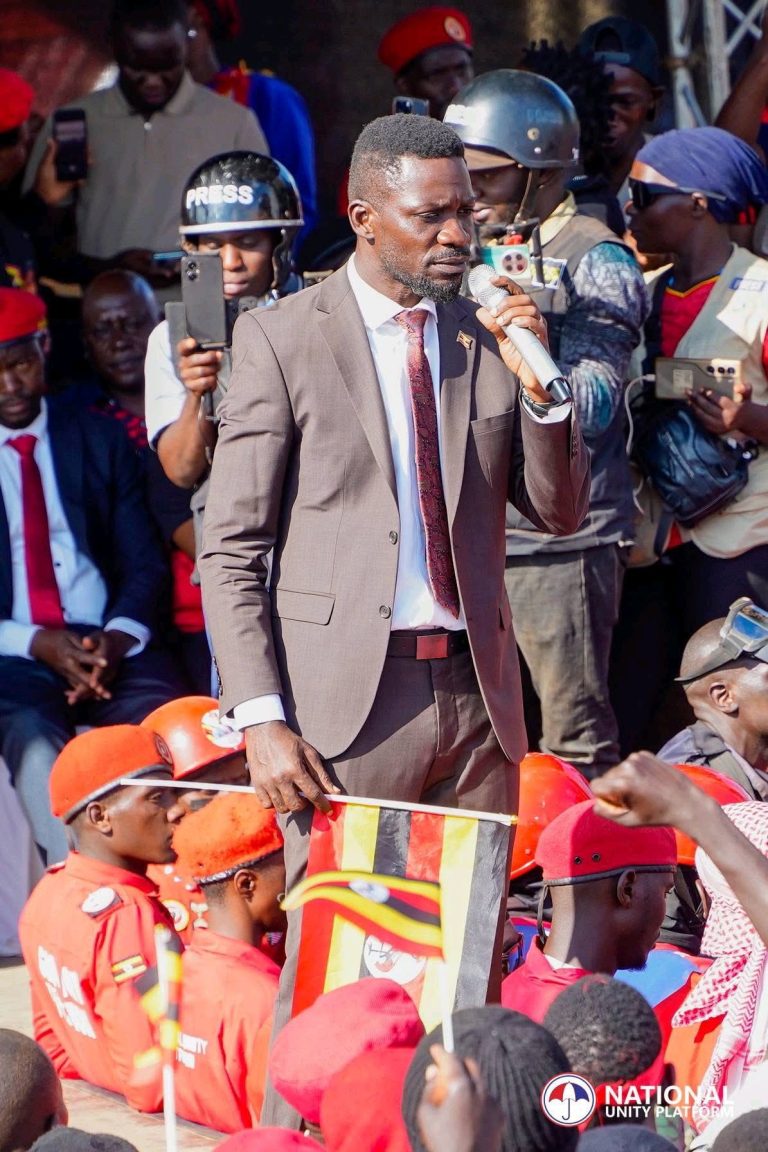
NRM presidential candidate Yoweri Museveni has publicly called on independent candidate Molly Asiimwe to repent and step aside in favor of the official NRM flag bearer, Annah Kansiime. Speaking to a large gathering at Bujaga playgrounds, Museveni framed his appeal as both a political and spiritual request, urging Asiimwe to trust in God and consider the interests of the party.
Addressing the crowd, Museveni did not hold back, emphasizing that Asiimwe’s actions were “tearing the party apart” and could undermine NRM’s unity ahead of the upcoming elections. He reminded her of her born-again faith and suggested that stepping down would be an act of spiritual obedience as well as political responsibility.
“Since you are a mulokole (born again), help us and step down. God will intervene for you,” Museveni said, prompting enthusiastic cheers from supporters. The message resonated with the audience, who responded with chants and applause, signaling strong support for the official NRM candidate.
Museveni’s comments highlight the tension within the party as independent candidates challenge official flag bearers, raising concerns about fragmentation and vote splitting. By appealing to both faith and party loyalty, Museveni is positioning unity as a moral and strategic imperative for NRM supporters.
Observers note that this public appeal underscores Museveni’s influence over the party and his continued role in shaping NRM’s candidate lineup. It also demonstrates his approach of linking political obedience with religious values, particularly in regions where faith-based appeals carry significant weight.
The call for Asiimwe to step down is part of a broader strategy to consolidate support behind Kansiime and prevent internal competition from weakening the party’s position in the upcoming elections. Museveni’s direct involvement in urging unity reflects the stakes of the contest and the importance of maintaining cohesion among NRM members.
Supporters at the event appeared energized by Museveni’s remarks, expressing confidence that NRM’s official candidate would secure victory if party members rallied behind her. Social media reactions also reflected a mix of excitement and debate over the intersection of faith and political allegiance.
Asiimwe, who is contesting independently, has not yet responded publicly to Museveni’s appeal, leaving many speculating about whether she will heed the request or continue her campaign. Analysts suggest that her decision could influence NRM’s internal dynamics and potentially affect voter turnout in key areas.
Political commentators argue that Museveni’s message is a strategic reminder of the power of party hierarchy and the influence of incumbency in shaping electoral outcomes. By framing the appeal in religious terms, he aims to exert moral pressure on candidates and supporters alike.
The plea to step aside also raises broader questions about the role of independent candidates in Uganda’s political landscape and the challenges they face when confronting established party structures. It illustrates the tension between personal ambition, party loyalty, and strategic unity in electoral politics.
Museveni’s remarks come at a critical time as NRM prepares for the 2025 general elections, signaling that the party leadership is actively managing internal disputes to present a united front. The emphasis on spiritual alignment underscores the cultural context in which politics and faith often intersect in Uganda.
Observers have noted that such appeals are not uncommon in Ugandan politics, where religious identity can play a significant role in public perception and voter behavior. By leveraging faith, Museveni seeks to frame political decisions as morally guided choices rather than purely strategic calculations.
The crowd at Bujaga playgrounds responded enthusiastically to Museveni’s address, demonstrating strong support for his call to preserve party unity and back the official candidate. Supporters repeatedly voiced agreement with his assessment that independent challenges could weaken the party if not resolved.
Political analysts suggest that Museveni’s direct involvement may be designed to send a clear signal to other potential independent challengers that party cohesion is non-negotiable. It also reinforces the perception that the incumbent continues to wield significant influence over candidate selection and party direction.
Museveni’s appeal combines a moral, religious, and political rationale, aiming to persuade Asiimwe to act in a manner that supports the party while also honoring her personal faith. The approach reflects a nuanced understanding of the interplay between culture, religion, and politics in Uganda.
Observers also highlighted the timing of the appeal, noting that making such a statement publicly strengthens the pressure on Asiimwe while signaling to supporters that party unity remains a top priority for the NRM leadership.
The speech at Bujaga playgrounds is likely to be a reference point in discussions of intra-party dynamics and the influence of incumbency on candidate behavior. Analysts note that the combination of spiritual and political persuasion is likely to resonate with certain voter segments.
Museveni’s appeal is part of a broader effort to maintain control over party nominations and prevent fragmentation that could undermine NRM’s electoral prospects. By urging Asiimwe to step aside, he aims to minimize internal competition and consolidate support for Kansiime ahead of the official campaign period.
Observers are closely watching Asiimwe’s response, as her decision will have implications not only for her campaign but also for perceptions of party cohesion and the influence of Museveni within NRM. The coming weeks are expected to be decisive in determining how internal party conflicts are resolved.
In conclusion, Museveni’s public plea highlights the intersection of faith, party loyalty, and political strategy in Uganda’s electoral landscape. His remarks to Asiimwe demonstrate a deliberate effort to maintain unity, consolidate support for the official candidate, and ensure that NRM enters the election with a cohesive front.